Quick question. How many times today did someone on your team have to stop and wait for you to answer something?
If you lost count, you’re not alone. In a lot of owner-led businesses, the most important work runs through one person. Most of the time, that person is the owner.
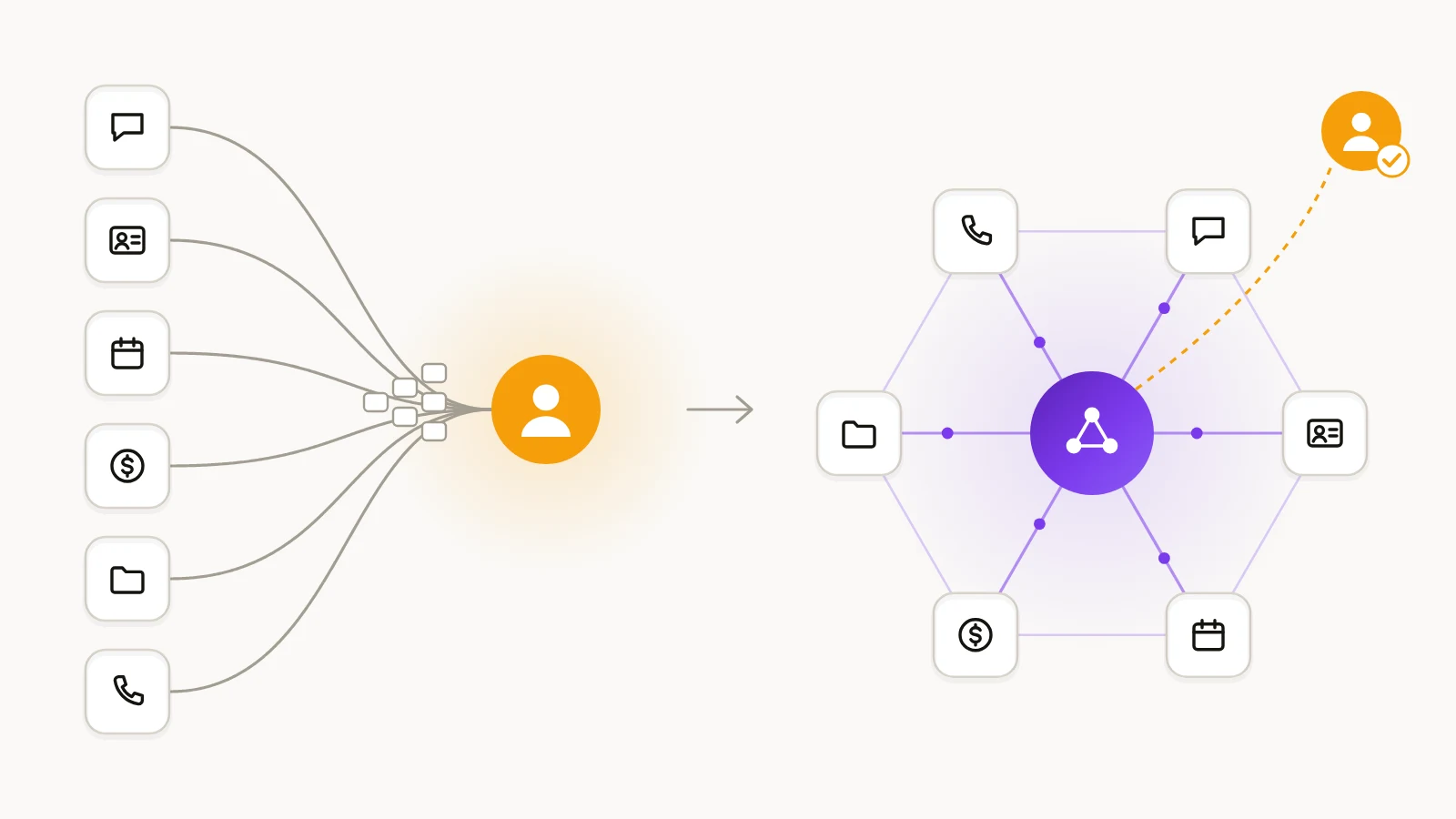
Now AI agents are showing up. An agent can read a customer’s email, book the vendor, and update the job while you’re in a meeting. Here’s the thing, though. It can only do the work your way if your way is written down. In most businesses, it isn’t.
Everyone’s talking about agents. Very few are ready for them.
Deloitte’s 2026 State of AI in the Enterprise survey asked 3,235 leaders about their plans. Close to three-quarters plan to deploy agentic AI within two years. Only 21% have a mature way to govern it.
Gartner goes further. It expects more than 40% of agentic AI projects to be canceled by the end of 2027, because of rising costs, unclear value, and weak risk controls.
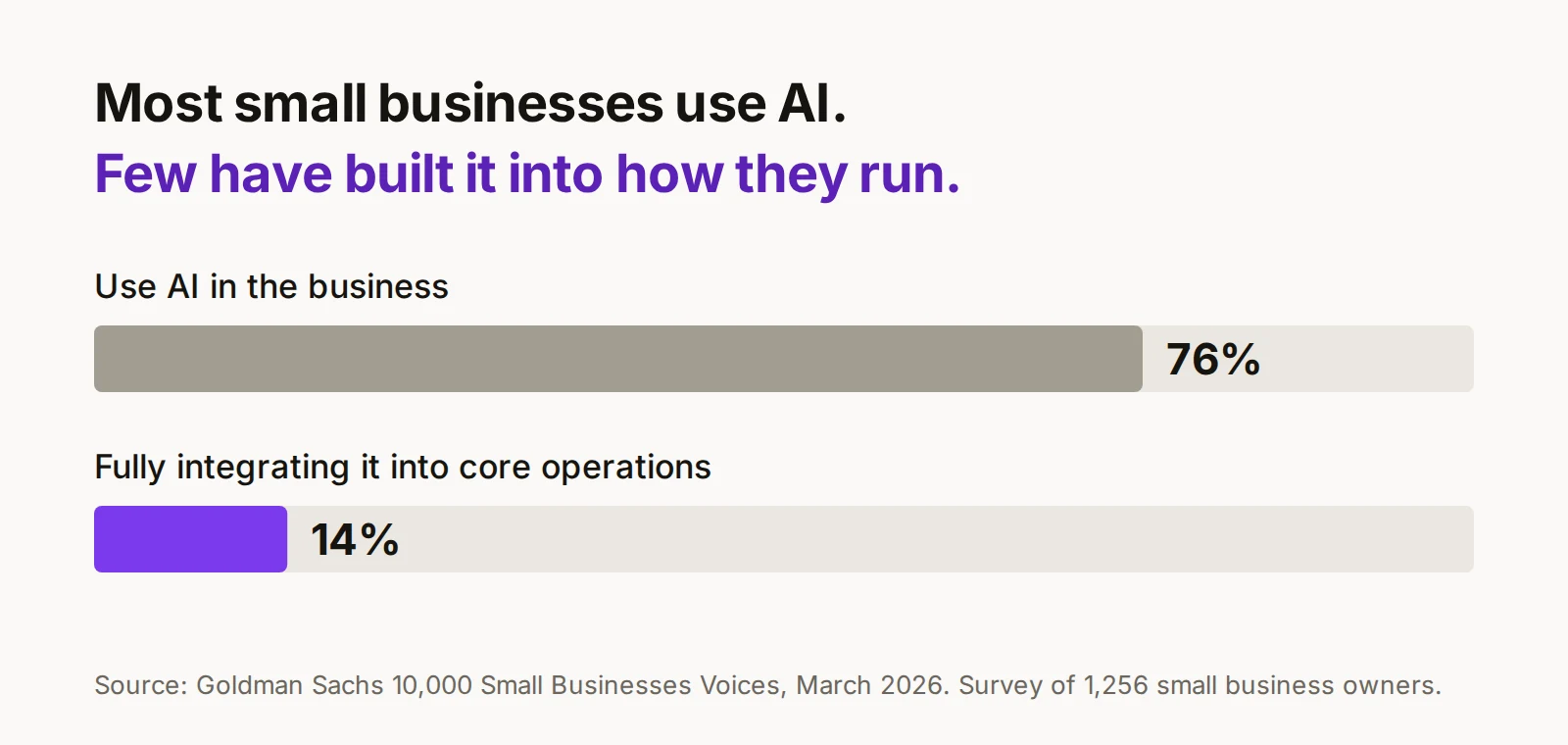
And small businesses? Goldman Sachs surveyed 1,256 owners this year. 76% use AI. Only 14% are fully integrating it into core operations.
So this isn’t a tool problem. It’s a process problem.
Why agents stall: the instructions only exist in someone’s head
Think about giving a stranger directions to your house. You know every turn without thinking. Then you try to write them down and realize how much you skip, like the left after the gas station or the driveway that’s easy to miss.
An AI agent is that stranger. A chatbot can guess. An agent acts. Before it touches a customer, a price, or a payment, it needs the steps, the rules, and the judgment calls your best person makes on autopilot.
Most of that was never written down. A Panopto and YouGov study found that 42% of company knowledge is unique to the person who holds it. And only 27% of small business owners always take time off when they need it. One reason the rest give: the business can’t run without them (QuickBooks).
Gartner calls rethinking the workflow from the ground up “the ideal path” for agentic AI. BCG puts numbers on it: 70% of the effort belongs in people and processes, 20% in technology, and 10% in algorithms.
Hiring helps, but it doesn’t fix this. The new person learns the same way everyone else did, by asking you.
Six steps to put an agent to work without losing control
Here’s how I’d start if it were my business.
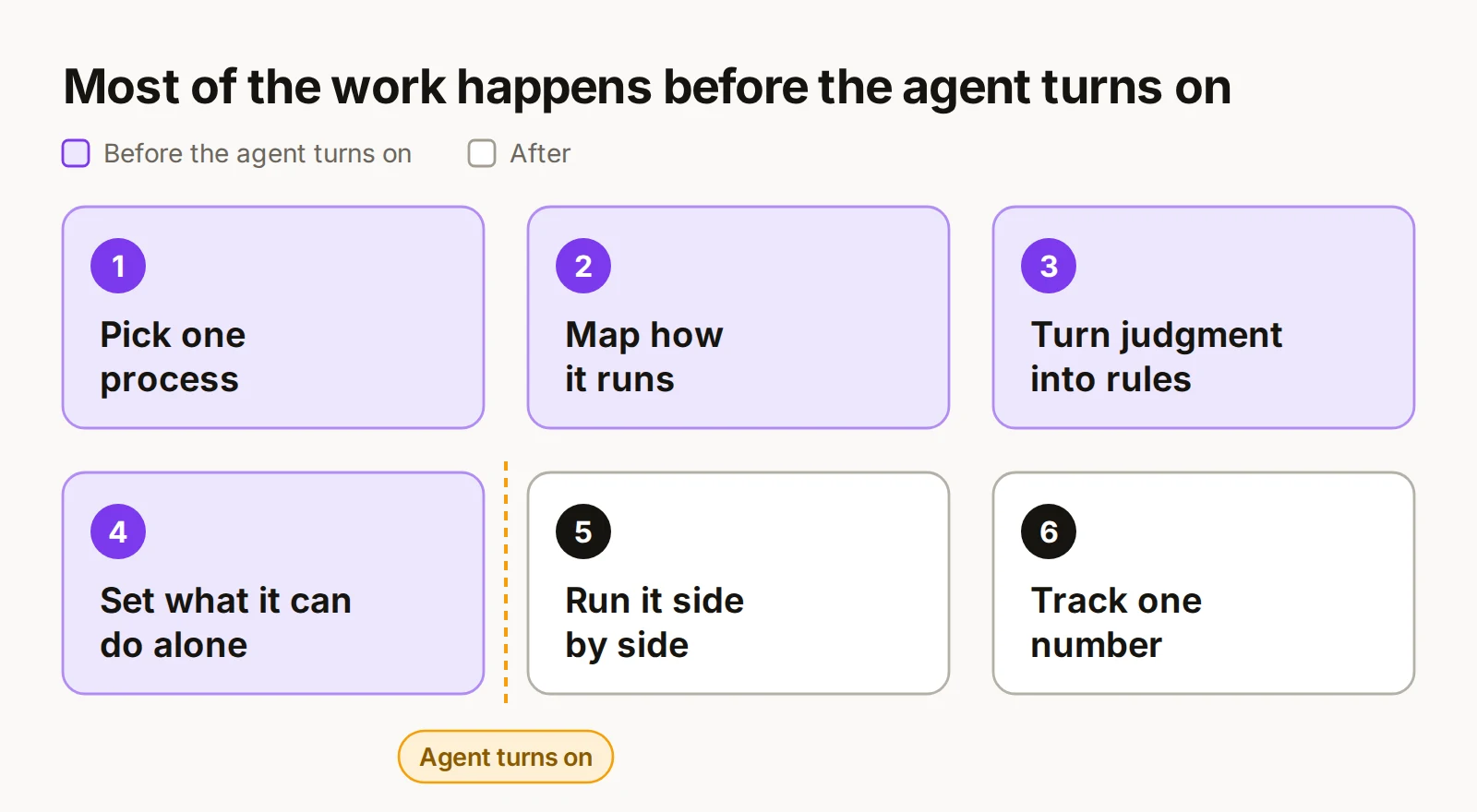
- Pick one process that stalls when someone’s out. Look for the spot where work piles up when one person is busy. Start with something that has steady volume and a clear finish line.
- Map how it actually runs. Who does each step, what tool it’s in, how long it takes. Sit with the person who does it and write down the workarounds too. Expect a few surprises. Most owners find steps they didn’t know existed.
- Turn their judgment into rules. What gets approved, what gets escalated, what “done right” looks like. Those rules become the agent’s instructions.
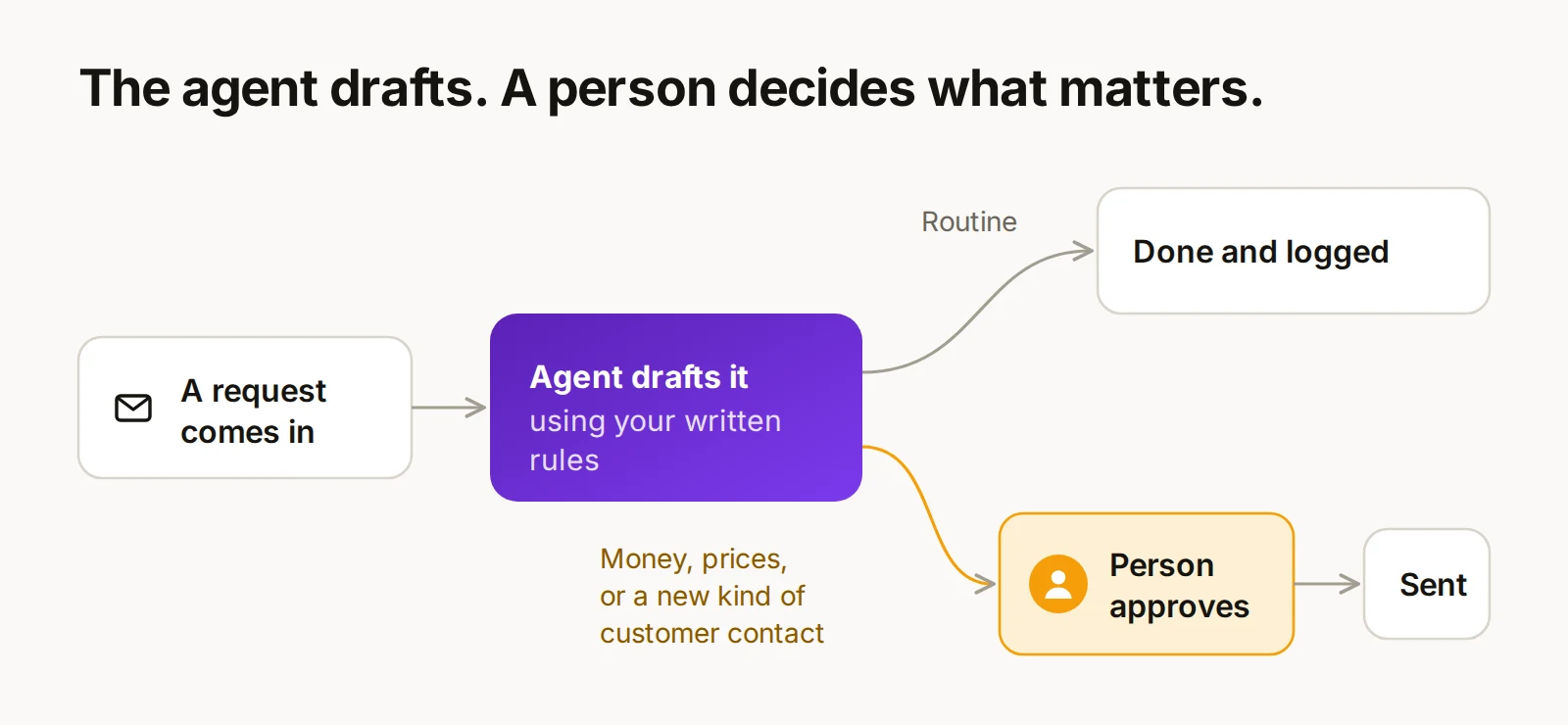
- Set what the agent can do alone. Give it access only to the systems it needs. Let it draft, sort, and propose. A person approves anything that spends money, changes a price, or reaches a customer in a new way.
- Run it side by side for two weeks. The agent drafts, your person checks. Where they disagree, fix the rules.
- Track one number. Days to send renewals. Time from call to dispatch. If it doesn’t move, adjust or stop.
Most of the real work happens before the agent ever turns on. It’s also the part most people skip.
Your standards, built in
I’m not going to tell you an agent will run your company for you. It won’t. What it can do is handle the repeat work the way you would, and flag the rest for a person to decide.
The owners who get the most out of agents won’t have the most tools. They’ll have their standards built into how the work runs, so the business keeps moving on the days they’re not around. That’s what we do at Workflow Autopilot: map how a business really runs before anyone decides what to automate.
So here's my question for you: which process in your business depends on one person to run?
If you can name it in a few seconds, that’s where I’d start.
Sources
- Deloitte, State of AI in the Enterprise 2026 (January 2026, 3,235 business and IT leaders)
- Gartner, Over 40% of Agentic AI Projects Will Be Canceled by End of 2027 (June 2025)
- Goldman Sachs 10,000 Small Businesses Voices (March 2026, 1,256 owners)
- Panopto and YouGov, via PR Newswire (July 2018)
- Intuit QuickBooks, Small Business Success Month 2024 (April 2024)
- BCG, The Widening AI Value Gap (September 2025)